Monday, February 19, 2024

Trip to Andaman & Nicobar Islands


TRIP TO ANDAMAN AND NICOBAR ISLANDS


India offers a very wide variety of places of tourist interest which can satisfy almost everyone who is looking for leisure, education, history or fun time. While I have had the opportunity to travel to almost every state in the country by now, a trip to the Andamans was due.

The Andamans, (short for Andaman & Nicobar Islands) a Union Territory, consists of 836 islands grouped into two island groups, the Northern Andaman Islands and the Southern Nicobar Islands, of which only 31 are inhabited.

The weather in the area throughout the year is rather hot since it is located in the belt of 6° to 14° North latitudes. The islands have a tropical climate with warm summers and not so cool winters, typically the temperatures around the year average from 23°C to 31°C.The rainfall is dependent on the monsoons and tropical cyclones are common in late summer. The ideal time to visit the islands thus reduces to the period of December to March and the time to definitely avoid is the Monsoons.

Port Blair is now well connected by air, and a number of airlines operate flights to Port Blair. Port Blair has a modern airport terminal too. The airport is named Veer Savarkar International Airport. International flights are yet to commence, may be due to some regulatory reasons.


First view of the Island


One of the things to remember while planning a trip is that the time of arrival in Port Blair and other places dictates the programme and the number of days necessary to get a good idea of life in the Islands. Also, movement between the islands is on a ferry which has fixed timings and its good to book tickets well in advance lest one has to spend an additional day just to move from one island to another. The movement of the ferries is of course subject to weather and sea conditions.


With all this in mind, we decided to go there in end January 2024, made our reservations for air travel, the hotels/resorts and ferries prior to the travel and divided the trip into 3 parts


Port Blair and Southern Andaman - 3 nights


Swaraj Dweep (earlier Havelock island) - 3 nights


Shaheed Dweep (earlier Neil island) - 2 nights


Port Blair and Southern Andaman

We traveled from Pune, hence we had to take a flight to Bengaluru and from there boarded a flight to Port Blair. Immediately on arrival at Port Blair at around 2.30 PM, we were picked up by a prearranged dedicated cab.

After a brief discussion with the driver who was also our local guide, we headed straight to the Cellular Jail about which I had read for the first time in Veer Savarkar’s autobiography in Marathi माझी जन्मठेप while in School. The description of his life in that jail, while undergoing a sentence of 50 years of RI had made a lasting impression on me. For entry into the Cellular Jail, there’s an entrance ticket for the visit, its also good to engage a guide who conducts groups through the jail. It was mainly the revolutionaries, many of them remain nameless for lack of records. who were sent to this far off jail for the more severe forms of sentences. The inhuman and unbearable conditions in which these ‘prisoners’ were confined in their solitary cells without any contact with each other, can be imagined only after a visit to the jail. The cells occupied by the revolutionaries, the place where they were made to extract oil from coconuts and were punished with lashes for failing to meet the impossible targets and worse, the gallows where some were hung, have left a very vivid impression which Veer Savarkar had very lucidly written about in his book. The visit to the cell he stayed in was also very moving. It involves a walk up to the cell which is on the second and top floor, everyone may not be able to undertake it.

At night, there’s a Sound and Light Show of 50 minutes or so, in fact 3 sessions of them, which explains the entire significance of the Cellular Jail and the life the revolutionaries led there. Its a very moving experience, one cannot leave without shedding a tear and paying homage to the Revolutionaries. Tickets need to be purchased, the seating arrangement is good, seat numbers are allocated on the tickets. The only jarring note was that many over enthusiastic visitors click videos of the Show which disturbs others, the Administration would do well to curb this activity. One of the major reasons for visiting these islands for many, is the visit to the jail to pay homage to the revolutionaries. Its a place not to be missed.


A view of the Cellular Jail at night


We had checked into the Hornbill Resort which was closeby. While the Resort is good, offers a fantastic view of the sea, going to the Rooms involves going down and up a number of steps, not easy for everyone. After spending the night there, on our second day, we planned to go to a place called Baratang Island, 110 kms away, from where we were to take a ride in a motor boat, called speed boat, through mangroves and see a limestone cave.

        For going to Baratang, there are fixed timings for the convoys which are escorted by the police since the route goes through Jarawa Reserves, the tribals inhabiting the area are yet to be integrated into others way of life and are at times known to harass the visitors. We took the convoy which leaves around 9 AM from a place called Jiraktang, which itself is around 40 kms from the town. There’s a speed limit of 40 kms/hr for the journey hence the whole trip takes almost the whole day to complete. The move back is also at fixed times. One of the highlights of the trip to Baratang is the expectation that one would see some Jarawas by the roadside but we were not so lucky.


At the end of the road journey, there’s a 10 minute ferry ride to cross over to the Baratang Island from where speed boats take you on a ride through the mangroves and to the limestone cave. The Cost of the speed boat is 9000 per boat, till the ferry site, everyone moves in their cabs and the drivers organise the sharing of the boat trip, thus the cost per head turns out to be Rs 900 per head. The 20 minute ride to the limestone cave is nice and worth it, reaching the limestone cave itself involves a walk of about 1.2 kms and is easy to undertake. The cave isn’t very big or deep and may disappoint those who may have seen such caves elsewhere. Prior to the return journey, lunch is generally to be had on the island, the facilities though not as modern as one may expect, are hygienic and clean and one can get reasonably good food, both vegetarian and non vegetarian, at a reasonable price. By about 6 PM, we reached our resort. This trip may be avoided by those who are short of time as it doesn’t have much to offer.

                                                The Mangroves


                                                The Ferry


                                                The Limestone Cave


On Day 3, we went to Wandoor Beach and also visited a museum located very close to it. The museum is small but gives a good idea and information about corals. The Beach itself is clean, nice with not too many visitors. This could be because the aquatic area is fragile and protected, no activities are permitted there. The view of the sea from here is breathtaking though, the water is clear with many different hues of blue/green.   
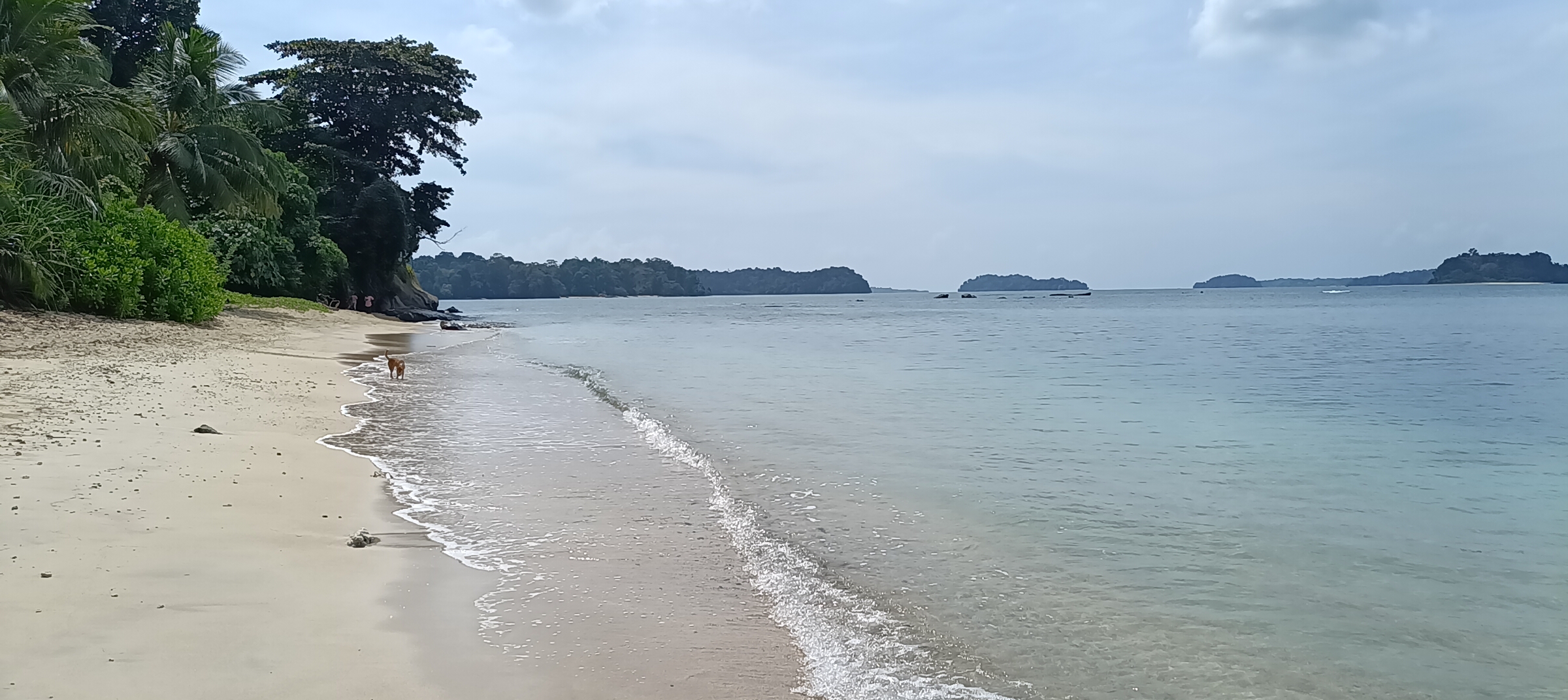


                                    The Wandoor Beach


While the view is great to spend some time, the same thing would get repeated in the islands which are being visited in the next few days. We had lunch there at a Resort close by. After some rest at our place of stay, the evening was for a trip to the Chidiya Tapu to watch the sunset. Enroute, we also spent some time at the zoo which is elementary although the trees and fauna are worth a look. The Zoo also provides electric carts for movement within, making it that much easier to go around.

The Chidiya Tapu gets crowded by the time sunset is due as almost everyone who is in Port Blair lands there and the sunset doesn’t disappoint either. Its a breathtaking view, worth the wait and travel. Just hope that the weather holds out and doesn’t spoil the fun.


                                                The Sunset

Swaraj Dweep

On Day 4, we were to move to Swaraj Dweep by a ferry. There are 2 companies which run ferries, Makruz and Nautika, both are similar. The ferries are comfortable and well equipped. The check in at the jetty is almost on the lines of an airport, security check and all that, so be prepared to reach the area at least 45 minutes prior to the departure. All luggage also goes along, the existing system works well but could do with a bit of modernity in handling. The ferry ride is for about 90 minutes, we had a near perfect ride in it. With that, the Port Blair part of the trip was over, except the return to the airport to catch the return flight.

We arrived at Swaraj Dweep around 9.30 AM, were received by our designated cab driver and checked into another Govt run Resort, Dolphin. There’s a bit of a walk with luggage involved here, as you reach the parking area.

The Resort was comfortable and catered for everything. The rooms here were double storeyed, we were allotted the upper floor and offered a good view of the sea. The property is right next to the sea, not much of a beach though, and the sea is clear with hues of blue. The property is quite huge and there’s adequate area to walk/laze around. Although the food here was good, we found a small restaurant just about 150 mtrs away which served local food and the food there too was excellent. In the afternoon, we made a trip to Radhanagar beach and spent the night back at the Resort.


                                                The views from the Resort


On the Day 5, we were scheduled to make a trip to the Elephant beach which has all the water sports activities and the ride to see the corals, but late in the evening of the first day, we were informed that due to the rumoured sighting of a crocodile, the Elephant beach wasn’t considered safe and hence wasn’t open for tourists that day. As such, we had to stay at the Resort for the day. We spent the day exploring the island and going to the Kala Pathar beach in the evening which was close by, not very big or impressive. The highlight of the beach is that getting into the sea is permitted at this beach, it also has many shops selling curios etc. One of the important lessons learnt was that its good to hire a bike/scooter for sightseeing rather than a cab. 2 wheelers are available at convenient locations everywhere, if you are confident and intend to hire one, make sure to carry your driving licence and follow the traffic rules, including wearing of helmets by both the rider and the pillion. Drunken driving invites strict punishments and heavy fines. We found the traffic discipline and ensuring of adherence by the police, exemplary all over the Union Territory.


                                                   The Sunset photos

It was around 9 AM on Day 6 (our third in Swaraj Dweep) that we got to know that the Elephant beach was now safe for travellers and accordingly we headed to the jetty to go to the beach. The jetty is rather disorganised and cramped for space. There are many stalls which sell tickets for the ride to the Elephant beach and the various adventure activities. All of them charge the same. The redeeming factor is that even if you purchase the coupons for adventure activities but for some reason don't undertake them, the money is refunded on return. By the way, the coupons for such activities can also be purchased at the Beach at the same rates and with similar conditions. The only thing to remember is that there’s no mobile network coverage in the Beach, hence all payments there have to be made in cash.


The speed boat takes 10 people and one has to wait for the boat to fill up, not too long though. The journey is about 40 minutes and nice and easy. Our captain of the boat was one Pranab Mukherjee or so he introduced himself and was witty. He regaled us with stories of his years of plying the boat in the area as well as telling us about what to expect and do at the Beach. At the small and constricted Beach there are a whole lot of tourists who come in for the adventure. There's a time of 3 hours given for the various activities after which you return in the same boat that you came in. At the Beach, you find very many activities taking place like jet skiing, parasailing, banana boats, sofa rides, Octopus ride and what have you. Also the boat ride, with a glass bottom, to see the corals. There’s also the option of a “submarine” ride, where you are under the water although the boat isn’t. Each of the activities here costs between Rs 600 to 800, the submarine ride is quite costly. There’s also the snorkeling, where after initiation into it, one is taken to the area of the corals, its generally restricted to age group between 14 to 70. At the Beach, toilets and bathing areas are provided as also lockers to keep your belongings and a room for change of clothes, all on cash payment.


We had opted for the glass bottom boat ride and a sofa ride. The glass bottom boat ride can very well be said to be the highlight of the visit. The view of the corals and the variety of multi coloured fish under the boat is breathtaking and a must when one goes to the islands. Thereafter, we undertook what was the Sofa ride in which we were tugged behind a speed boat as if seated, actually almost lying down, on an inflated ‘sofa’, it was quite an adventure and we were holding on to the supports for dear life. After that I even had a ride on a jet ski, my first one. That too was very adventurous. After about 2 hrs, all of us had completed all that we set out for and we got back to the jetty for our return and the last day at the island.


                                    The adventure sports boats/equipment


Shaheed Dweep


The next day, Day 7, we boarded the Nautika Ferry for the Shaheed Dweep. The process of getting into the ferry is simpler and smooth. At the Shaheed Dweep, there’s a longer walk to the parking area but there are cycle rickshaws available to take the luggage up to the cabs. They generally charge Rs 100 and combine the luggage of many passengers.


Here we checked into Sea Shell Resort which has a private beach of sorts and is a high end luxury resort. Has all the trappings, swimming pool, spa et al. Food is good.


This island is known for its serene and pristine environment, and is a popular destination for a tranquil getaway. The beaches have white sand shores and crystal-clear turquoise waters. The beaches are called Laxmanpur Beach, Bharatpur Beach, and Sitapur Beach and are all located close to the Resort. On this island, one can enjoy sunbathing, swimming, or just take long walks along beautiful beaches, watching the sunrise/sunset. The waters surrounding the island are rich in coral reefs and marine life.


                                    Views from the “private beach”

We went to the Laxmanpur Beach by cab to laze around and watch the sunset. Almost every tourist on the small island seemed to have headed there. The sunset was spectacular. After sunset, we went to the shops nearby which sell curios, food items and local delicacies.


                                      The Sunset

On Day 8, our second day at the island, we went to the Sitapur beach, early morning to watch the sunrise. There was a crowd of about 100 of us, not everyone likes to wake up early to watch the sunrise. The sunrise was worth all the trouble though. Thereafter, we went to the Laxmanpur Beach 2, also called Natural Beach, it has a Natural bridge made of coral reefs over the ages. One must go there during low tide, thats the time that one gets to walk among the corals. We were lucky to see the corals and fish swimming about in the water. It involves quite a walk over the corals and one needs to be ready for it. Our guide was the one who showed us the places where such corals and fish were, without a guide, one may miss out on this part except seeing the corals.


                                   The Sunrise from Sitapur Beach


                                        The Natural Bridge


                                        The Coral in the shallow water during low tide


                                    These fruits are used to make heady spirits    

After a hefty breakfast, we set out again to the jetty area for another ride in a glass bottom boat on this island. Dare say, the corals here are in greater abundance and are a delight to watch, although most tourists give it a miss since they may have already seen it at Elephant Beach. Other sports activities are also available but not many people undertake these.

We returned to the Resort for some well deserved rest after the hectic trip over the last week or so. In the evening, couldn’t resist walking down to the Sunset point to have another look at the sunset though, it was that close by. Here again, it may be better to hire 2 wheelers rather than a cab.


                                                           The last Sunset in Shaheed Dweep

Back home

After spending 8 days in the islands, it was time to get back home. We boarded the Nautika ferry to Port Blair, after some shopping in Port Blair on the way to the Airport, we boarded the flight to Bengaluru and then to Pune.

The Andaman trip was excellent and is a must for all those who love to travel. The beaches are clean, unlike most other beaches in our India, the waters are pristine and of many hues and the people are very friendly and go out of their way to make you comfortable.


Monday, May 15, 2023

माझ्या आठवणी


NDA खडकवासला


1969 ते 1971 पर्यंत मी NDA खडकवासला मध्ये होतो. त्या वेळच्या काही आठवणी.

त्यावेळी, NDA ला जायला, खूपच कमी, फक्त ST च्या गाड्या जायच्या, आठवणी प्रमाणे स्वारगेट हून कर्वे रस्ता मार्गे.

आम्हाला कधी कधी रविवारी घरी यायची परवानगी मिळायची, दिवस भर राहून परत जाताना, गरवारे कॉलेज च्या ही आधी, कर्वे रस्त्याला शेवटची बस पकडायचो. कर्वे रस्त्याला तेव्हा फार वस्ती नव्हती, बस सुरू झाल्यावर, सगळीकडं अंधार असायचा आणि आणखीन पुढं गेलं की अजिबातच वस्ती नव्हती. एकदम NDA च्या जवळ गेलो की प्रकाशाचा झगमगाट दिसायचा. आता अगदी NDA पर्यंत वस्ती आहे, PMPML ची नियमित सेवा ही आहे. चांदणी चौकात वाहनांची संख्या आणि वर्दळ प्रमाणाबाहेर जास्त आहे, त्यावेळी अगदी कल्पनेच्याही पलीकडे.

NDA मध्ये घोडेस्वारी ही शिकलो, मजा यायची. कधी कधी, cross country म्हणून NDA बाहेर ही आम्हाला घेऊन जात होते, अशावेळी शिवणे, उत्तमनगर वगैरे त्यावेळची गाव आठवतात. तिथं आमचं छान स्वागत व्हायचं, उसाचा रस, भुईमुगाच्या शेंगा, हरभरे असे season प्रमाणे जे असेल ते खायला प्यायला देत होते, कधीही पैसे न घेता. आता, ही त्यावेळची गावं पुण्यात समाविष्ट करण्यात आली आहेत, शेत जमीन बहुतेक ठिकाणी घर बांधण्यात गेली, तसला पाहुणचार ही संपला असेल आणि cross country ची जागा ही.

पुणे आता इतकं अफाट पसरलंय की NDA ला जाण्यात किंवा तिथून शहरात येण्यात त्या वेळच्या सारख नावीन्य किंवा रोमांच राहिला नाही


पुणे शहर आणि पुणे कॅम्पचे ते दिवस 


आम्ही  वानवडी भागात ( जुन Command Hospital) रहायचो, १९६८ ते १९६९ साली. तेव्हा त्या भागात रहदारी खूपच कमी होती, दिवसाही क्वचितच वाहन दिसायची, संध्याकाळी ती ही दिसायची नाहीत, पण एवढंच काय, रस्त्यावर माणसं सुद्धा खूप कमी असायची, सगळं कसं शांत शांत असायचं.

तेव्हा पोलिसांची भीती वाटायची, सायकलला जर (केरोसीनचा) दिवा नसला की पोलीस पकडायचे आणि दंड भरावा लागायचा

पुढं पुणे कॅम्प च्या पलीकडे ही सगळ्या बाजुंना पसरत गेलं, सगळी वाहन वाटेल तो रस्ता पकडत त्यातून जायला लागलीआणि कॅम्प चा जो एक वेगळा ठसा होता तो मिटत गेला

Tuesday, December 20, 2022

Those Days in Indian Military Academy

 THE PUJA  AT RED FORT


In the second trip, got a chance to go to Delhi during the Autumn term 1972. We stayed under the arrangements of a Gorkha Bn which was then in the Red Fort. It was my first visit to Delhi, enjoyed the food in the numerous eateries just outside the Red Fort/Chandni Chowk areas and visited many monuments.

A few days later, it was Dussehra time while we were still there. We were told to be present at the ground for the ceremonies conducted by the Bn. These included sacrifices, as then permitted, and were quite a shock for a vegetarian like me.

The process of selection of the Jawan for the task and the importance of the ceremonies was explained, for the person selected for the task, it was a great honour.  It was a fairly long-drawn-out process with individual offerings of chicken/fowl, followed by goats etc being carried out initially. After some time, the moment for the major sacrifice of the day, which everyone was eagerly awaiting, arrived.

.

The Jawan who had successfully carried out THE sacrifice in one swoop, was brought around to the shamiana where we all were sitting and rightfully paraded as a hero for the day. Then, everyone was offered Tirth/Theertham having attended the ceremony as is the custom. A revered tradition, it could not be avoided. The only reason for thinking of avoiding it was that it was dark coloured and although we gulped it, it was a very strong and potent potion. It was probably a diluted or undiluted XXX portion. The movement of the liquid through the body could be felt even better than by an X-ray machine.

Years later, I was on deputation to Assam Rifles and people there were surprised to see me attend all the ceremonies including Kaal Ratri and fully participate in them, even though a Signaller.


Those Days in Indian Military Academy

THE MIDTERM HIKE


In the tough and demanding training schedules of the Indian Military Academy, the midterm breaks provided much needed and well-deserved opportunities for relief with outings.

One was to the Jim Corbett Park where we went in those sturdy 1 Ton Nissans, with their tarpaulin covers removed so that we could watch everything. A few DSs (Instructors) and our Bn Cdr accompanied us. Also remember a visit to Lansdowne and the Garhwal Rifles Centre and their imposing Officers’ Mess enroute, probably spent a night there.

We then moved to the National Park after a long journey.  We were many of us, booked probably in a Dak Bungalow. 

Come the evening and we all assembled for the evening meal and were seated around a table. In IMA, DSs were like Gods, so one can imagine the environment there. 

Before we knew it, a glass of beer, which GCs (Gentlemen Cadets) were permitted to consume, was placed before us, while the DSs probably had their choice of drinks. I hadn’t consumed any type of alcohol till then but decided to have the beer as an adventure during the outing, guess many of us were similarly placed. 

Just one or two sips later, everything seemed to be out of focus and moving uncontrollably. It was sometime later, that the Bn Cdr asked if someone could go fetch a transistor radio so that he could listen to the news. Many of us, myself included, seized that opportunity to move out, clearly recalling that I didn’t dare return to the table that evening to avoid any embarrassment. Thankfully, someone did handover that Radio. And those that didn’t return were not particularly missed.

Over time, of course, Beer did become a favourite, it still is.

🍻🍻🍻🍻🍻🍻🍻🍻

Saturday, September 4, 2021

Career in the Forces: What's your Lucky Number


Defence forces have always been an attraction as a career option. Apart from the lure of wearing the uniform, it is the pride and faith of the Nation that makes it so. In the 60s, the master guides and magazines, then available, always had a suggested question wherein the candidate would be asked, why the Forces and not the Police, the winning answer invariably was the pride of joining the Forces to fight for the country, leaving policing to lesser mortals.

Let’s see, how those who join the Army progress in their career (Situation in the Navy and Air Force would be more or less similar).  Here are some statistics that are useful. NDA is without doubt the premier institution for training of those desirous of making it as officers in the three services. Entrance exams for NDA are conducted by the UPSC where candidates in huge numbers apply. In 2020 for example, for a Course with a capacity of 300, around 5.3 lakhs applied out of which 2.4 lakhs appeared for the exam. The figures are staggering. No wonder then that entry into the NDA is considered as one of the most competitive.

After such a competitive exam and selection, one would expect that the career progression would be smooth over the years with experience gained while serving in various areas of the country like the other All India Services.  But is it so?

The Army structure can be best compared to a pyramid with a huge base. Lieutenants, captains, majors and  lieutenant colonels, who constitute almost 85 per cent of the officer cadre, are at the base, promotions to these ranks are generally assured based on years of service.  Selections to higher ranks in the 15th or 16th year, kick in from colonel level which is the first select rank. Unfortunately, 50 to 60 percent officers miss the chance to be promoted at the very first step of the selection ladder mainly due to lack of vacancies, not capability and relative merit. Selection to higher ranks is even tougher as the rate of missing out continues.

So what makes one eligible and not another?

Selections are made through selection boards, some call them rejection boards. The inputs to these Boards are performance on courses, honours and awards, disciplinary record and last but the most important, with about 90 percentage weightage is the Annual Confidential Report in which the officers performance and potential for higher ranks is assessed by his superiors up the chain. Every year or more often, the reporting officers award single digit figurative assessment for various attributes of the officer being reported upon, with a highest of 9. These gradings in numbers are awarded for a plethora of attributes some seemingly mundane, others vital. Figurative assessments are based on individual reporting officers who all have their own perceptions on what an officer has demonstrated or has the potential to. Many factors come into play in this, as every assessing officer too has his likes and dislikes, favourites, loyalties and the like. While some are known to be very liberal, some realistic, some are stingy. For example, a very good and capable officer may be rated favourably by a reporting officer while another officer with similar qualifications and attributes may not be awarded similarly by a stingy reporting officer. Therein lies the catch.

With promotions being vacancy and relative merit based in a batch, its all in the numbers that the officer gets in his ACRs. If reports are to be believed, some aren’t approved since their merit is often decided in the second decimal place amongst their batch. Even in cases where all things like courses, postings, tenures etc being equal in an officers profile and record of service, it all boils down to what’s the lucky number that your boss fancies. A lower grading specially in critical years will mar any chances of promotion to higher rank(s) for ever, once awarded its rather difficult to get it set aside.

And why is rank that important? In the Armed Forces, pay and allowances, perks and authority are naturally related to the rank and position held. Unlike the civvy street of the Govt, there’s no NFU or auto upgradation of pay/status with a batch. While the Armed Forces personnel are allowed to carry their ranks by the Constitution even after they retire from active service, while in service or even after retirement, allotment of guest rooms, seating arrangements, entitlement of facilities like canteen institutes etc are all governed by the all-important rank.  And for that the boss’s favourite number must tally with your lucky number (9 or as close to it as possible) else, its goodbye to higher ranks even if one is capable.

Friday, March 26, 2021

Lesson in Punctuality


In February 1965, I was a student in Sainik School Satara, a boarding School, in class 8. 


Every evening, we used to have a roll call where important orders/updates used to be passed. on one such day, for some reason only 28 students were on time out of more than 200. Apart from a "moral lecture", as a punishment, it was announced that we won't get to see the next movie, a weekly feature. And the movie was Kabuliwala, we had just read the famous story in our English class and kept hoping, nay were almost sure that since most of us were late, the authorities would relent, punish us in some other manner but  would let us see the movie.

But came the day and only those 28 who were on time were allowed to see it, rest of us had go without it. My classmate, Atul Lakhe, who has preserved a large number of photos and other memorabilia of the School days has kindly shared this entry that he made in his diary of the day


That one incident taught me the importance of punctuality and more importantly the need to persist with a decision taken, else people might take you for granted. 

Having spent more than 30 yrs in the Army, it was  further reinforced but when I joined a PSU after Army, punctuality became the biggest casualty, so much so that I had to change this habit since many a time, I would arrive on the appointed time only to find the preparations had yet to be completed. 

Punctuality remains one of our bigger weaknesses.


Monday, September 7, 2020

MEMORIES OF SAINIK SCHOOL SATARA


Joining the School

We had just moved to Satara from Mumbai  in 1961 and I had been admitted to New English School, when one fine day I was told that I would now be going to another School. Although I don't recall the exact date, as we proceeded in a Tonga to the School with a Steel Trunk and other items beyond Powai Naka which was virtually the limit of the city then, there was a sense of foreboding and disquiet surely. As we entered the School Gate, little did I know that the School would not only define and shape my career but completely overwhelm my lifestyle forever. The residents of the Wada we stayed in, weren't so optimistic though, many of them said I was being sent to a Remand Home, which was also in the area!

Foundation Day

I vividly recall the School foundation day, hopefully correctly, more so because that's the first time saw a Helicopter when it landed  where the then Parade Ground was, in the process the amount of dust it raised was mind boggling. That and the huge Brass bell which collapsed are ingrained in my mind. The then Defence Minister had arrived to inaugurate the School.

Initial Years

The reminiscences of living away from home for the first time are surprisingly rather vague. Living in those barracks which once housed Prisoners of war or so the stories went, must have been strange but don't recall feeling overly homesick or anything of the sort. We were probably just about 150 or so in the beginning, till the School expanded slightly in early 1962, and later almost doubled in 1965/66. I had joined in the 5th class. Most of us had come from Marathi/regional language  medium schools hence at the end of 6 months, almost all of us had to repeat the 5th class from January 1962. The academic year changed to January to December too. There were select few students who spent only 6 months in class 5, I came to know only very recently why but it doesn't  matter now.

The Initial Lot

The School had an interesting mix of students, overwhelmingly  Marathi but we also had a fair sprinkling particularly from Punjab, children of defence forces personnel from all over, I was one too, some from Southern/ Eastern India. That taught us, right from then,  about living life in a cosmopolitan environment. As days went by, we realised that there were students whose parents were famous and rich, some prominent politicians including Ministers too. Not that it mattered much as far as we or the School curriculum was concerned. But on visiting days or while returning from vacations, one could see some coming in fancy cars with loads of eats and stuff.  Even in our class we had our share of such students. Since we were the first students to get in, our induction was easy, hope it still is.

 Fun Times 

One of the pastimes  some of us used to indulge in, was recalling the School numbers and the student associated with them. even now, one can recall especially those up to School number 150 without going too wrong.  There were many games and sports we got to play in School but the one good habit picked up was getting up early, going for PT regularly. We used to enjoy those road walks and runs too,  especially during Monsoons, when we could go out of the School. Mainly due to the School but also NDA and Army later, this habit has stayed and the day doesn't begin well unless there's a strenuous walk or a round of Golf early morning. Since we joined the School in its infancy when the infrastructure was just coming up, we didn't have a swimming pool or the Gymnasium till both facilities came up towards  the final years of our Schooling. That meant that many of us couldn't learn to swim well.

In the initial stages, the school was a novelty in the sleepy town that Satara was. I recall that a boxing exhibition was organised in front of the Rajwada featuring students, probably locals were given preference. Uday Godbole and I had one of the earliest bouts, being in lowest weights, don't recall the result now but wonder if that show put off some locals from joining.

Later, we used to take part in or visit Science exhibitions in local Schools as also Republic Parades. If I am not too wrong, we also marched to a theatre to go and see Battle of the Bulge, also remember watching Hatari similarly, those were enjoyable outings. There used to be lots of sports fixtures with the Schools in Panchgani and it was always a pleasure to go there to witness the matches.

Nicknames

In Maharashtra, at least then, it wasn't common to have nicknames, the most popular probably was Bandya but when the School commenced, many of the fellow students were given nicknames like Gunda, Gabru, Laddoo etc most of them by Ghadge sir. These have stuck.

Punctuality and Discipline

One incident I vividly recall is when most of us were, for some reason or the other, late for the evening roll call in February 1965,  which used to be held near the Dining Hall. Just 28 were on time. As a punishment, it was announced that we won't get to see the next movie which was a weekly feature. And the movie was Kabuliwala, we had just read the famous story in our English class and kept hoping, nay were almost sure that since most of us were late, the authorities would relent and that we would get to see the movie. But came the day and we were still not allowed to see it. That one incident taught us the importance of punctuality and more importantly the need to persist with a decision taken, else people might take you for granted. Army life further reinforced this but when a joined a PSU after Army, punctuality became the biggest casualty, so much so that I had to change this habit since many a time, I would arrive on the appointed time only to find the preparations had yet to be completed. Punctuality remains one of our bigger weaknesses. Atul Lakhe, my classmate used to maintain a diary, extract of which he was kind enough to share with me

Art

For some reason, in spite of an excellent teacher like Late Mr Kukkal, I just could not pick up the art of drawing/painting. Somehow used to manage to pass. It was probably in 8th class, that we were asked to paint a Kabbaddi match scene. For me, drawing one person used to be difficult, here I had to draw very many in different poses. I approached Ajit Magar, my classmate to help me out since he was good in drawing (also singing by the way), and he promised to help. But as the date of submission approached, somehow things didn't work out and I had nothing to show for my efforts. I somehow managed to create something and submitted it. When the result was announced, turned out I had got a Zero, it was that bad. Luckily, it wasn't a mandatory subject and didn't affect the promotion to the next standard. And from the next session, one had to choose between Art or Craft which was carpentry, my choice automatically went to Carpentry. There with another classmate Amar Patil, we created a model of the Obstacle Course which had just come up. That was quite well liked. Till date, haven't tried my hand at drawing or painting, in fact one of the reasons for not opting for Biology was because I was told that one would have to draw a frog!! Not that it mattered, since I went on to join NDA.

Expansion of the School

Since the School had come up in old barracks, we saw great activity in creating the present day dormitories, Main Building, the Dining Hall etc. It was great fun watching all this coming up, climbing up the trees and then jumping on to the sand that would be stored close by for the construction. When the foundation stone for the Dahanukar Auditorium was laid, we watched in awe as the local artist painted the whole stone one evening. The intake of the students almost doubled and the School went to have three more houses. That also meant that now it wasn't really possible to know everyone.

Delhi Party

Sometime in 1964, from being a local student I went on to become part of the Delhi Party since my father got posted to Lucknow. The Delhi Party was only for the vacations when all of us would go under the supervision of one of our teachers by ST bus to Pune, then onwards to Mumbai by a special bogie and then by one of the trains (was it Punjab Mail?) where I would drop off at Jhansi to continue to Lucknow. Return journey was similarly undertaken in the reverse order. Till then my coming and going used to be to home in Satara, hence this was a big change for me, kind of liberating. Remember finishing off almost the complete pocket money on the journey on eats etc between Pune & Mumbai apart from the mandatory halt at Shirwal on the bus journey to Pune when we would get down and buy  Parle peppermints.

Academics

Apart from the hitch in 5th Class, the move through the School session was quite easy. We had an excellent, dedicated set of teachers who took great care in helping us through the syllabus. Although its almost impossible now to remember everyone now, recall with fondness and gratitude Ms Sapre, the strict Maths teacher, Mr G Devasahayam, the English teacher who was fond of calling everyone by their full names eg Deebak Keshav Khar (he was probably a Malyali hence the pronunciation). At that time, the West Asian countries had just discovered oil and getting rich and he used to tell stories about them and the Americans which we used to hear in awe and bewilderment. Mr R P S Chouhan replaced him. Then there was Mr P C Sharma who taught us Hindi and had an unusual punishment of keeping pencils between fingers and squeezing the hand if we misbehaved in class. Also recall Mr Kapoor, was he, who taught Physics for some time. Mr Kirtikar was a Naval NCC officer to boot and although he never taught us, remember his smart appearance at NCC in his uniform and singing the song Life in the Navy....And there was Mr Asnare also smart in his NCC uniform and our additional Maths Teacher. I was rather fond of the subject and used to enjoy the classes. Then There was our House Master, Mr Babar and Mr Deshmukh in Shivaji and Mr Pandit in Karve. Mr Pandit used to be a good cricketer too, its he who coaxed me to write for the School journal which is how I had an article on Mihir Sen a swimmer of repute who had just swum 7 different Seas then. Throughout School I was the only Kher, till Mr V G Kher joined as a teacher, no relation of mine though. There was Mr Marathe too, one of the few to own a bike Motor Cycle then. And then we all remember Mr Ghadge and the two Jadhavs who were PT instructors, Gadge sir was much more than just that, he was the one who could control the students, taught us nuances of PT, games, boxing etc and probably knew everyone by name and idiosyncrasies. A tough but popular teacher, there's a lesson in that, if you are good, people will remember you even if you are strict.

Appearing for NDA

As we progressed in School, it was time to appear for the NDA entrance exam. We had been keenly watching our seniors going into NDA and that in any case was the goal of the School as well as for most of us. Passing the written test wasn't much of a problem but there were a few "smart ones" who otherwise brilliant, managed to fail the UPSC test itself to avoid going through the process. We were well coached for the written and even better for the SSB where the Principal Late Col Puri used to personally aided by the teachers supervise our group discussions and tasks. All that preparation helped and many from our class got through  in the first or second attempt, I qualified in the second and last attempt. Unaware initially, the repetition in class 5 in 1961 had left me with only 2 chances, while many had 5 or lesser. While preparations for NDA were on in right earnest, our medical and physical conditions were also being looked at, many of us were underweight. We were then put on a special diet which consisted of boiled potatoes among other things which didn't lead to much increase in weight. However,  we managed to clear the medical as well, though still underweight, the Drs faith in my ability to gain weight later has been fully vindicated as I now try to lose weight without much success.  It was only later that dietary research claimed that it was fried, not boiled,  potatoes which increased weight!! Oh, chips and burgers would have been so very welcome in the School diet then.

The Reading Habit

The School had a well appointed library which I made good use of.  Mr Karhade was always very helpful in the library. Magazines like Life.. English and Marathi books, all fascinated me, the reading habit continues to this day. These days, Social Media, Internet, TV, OTT and Kindle etc have probably led to reduced interest in the published word but for old timers like me, turning the page still retains its charm. this is one habit I hope I continue to nurture.

School Leaving

Ours was the first batch to complete their entire schooling from 5th to 11th, those were Senior Cambridge days, in December 1968. Many of our classmates had left the school earlier days due to various reasons but most did to join NDA after successfully completing 10th in June 1968. It was left to very few of us to complete the Schooling. Having cleared the SSB, awaiting the Merit list, many didn't take the Senior Cambridge very seriously, in retrospect that wasn't  the right thing to do but we were feeling self assured that after leaving School we would join NDA in January 1969. Remember, many including me just waiting for the cup of coffee provided to  help us keep awake for late night studies and then  promptly going back to the dormitories to sleep. Those were such carefree days. After appearing for the exams, we left School, exact date eludes me though. Remember singing the song  in chorus Savere Wali Gadi Se Chale Jayenge during the last dinner that we had in the School.

Looking Back

A we left School, little did we realise then that the bonds developed during that period would remain strong forever, most of us are still in touch with each other. Everything that we learnt in School be it academics, physical fitness, sports, public speaking and social etiquettes  has helped in living a meaningful  life and making a mark in the Society we live in. Our dedicated teaching and associated staff, matrons, ward boys and mess staff deserve our gratitude. The Batch was most fortunate to be with only one Principal all thru their schooling, special mention must be made of the late Col & Mrs Puri who deserve our special gratitude, their love, care and dedication helped us adjust through the various phases of  life that we as young boys of 9 or 10 went through till we left School. I have the fondest memories of the School even now. The uniform I wore for the first time in School in 1961, continued to change colours till I retired from the Army in 2003.

Post script

Wanted to end on that note but must mention that we were fortunate to be in the School on Boxing Finals Day as guests in December 2018 as we gathered in Satara and celebrated the Golden Jubilee of School leaving. The School management deserves our thanks for that too.